
Aims and Scope
NMR 2026 aims to foster connections between the different subareas of nonmonotonic reasoning and provide a forum for emerging topics. We especially invite papers on systems and applications, as well as position papers addressing benchmark issues. The workshop will be structured by topical sessions fitting to the scopes of accepted papers. Workshop activities will include invited talks and presentations of technical papers.
Invited Speakers
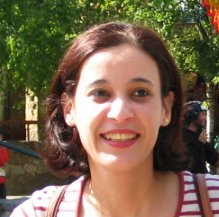
Leila Amgoud
Title: Argument Similarity: Roles, Measures, and Impact on Semantics
Arguments are the fundamental building blocks of any argumentation system, serving as the primary means of supporting claims with evidence. However, in many real-world settings—such as dialogues, debates, and multi-agent interactions—arguments are rarely independent. They often rely on common evidence, or are put forward by different agents expressing closely related ideas in different ways. Such situations naturally give rise to various forms of similarity between arguments.
In this talk, I will address several fundamental questions concerning argument similarity. What does it mean for two arguments to be similar? How can similarity be formally defined and quantitatively measured? How should similarity influence the evaluation of an argument's strength or acceptability? Finally, how can argumentation semantics be extended to explicitly account for similarity relations between arguments?
To answer these questions, I will present a systematic overview of existing approaches to argument similarity. I will also highlight the key conceptual and technical differences between extension-based and gradual semantics, with particular emphasis on how these two paradigms incorporate—or fail to incorporate—similarity into the evaluation process.

Matthias Knorr
Title:Forgetting in Answer Set Programming: Where Do We Stand?
Given a knowledge base, forgetting aims to reduce its signature while preserving the semantic relations over the remaining signature. In the context of Answer Set Programming (ASP), a wide variety of forgetting approaches has been proposed, often based on differing—or even conflicting—objectives and intuitions.
In this talk, we will discuss the main approaches to forgetting in ASP, focusing on the challenges and limitations of preserving all semantic relations over the remaining signature. We will also highlight connections to recent work on abstraction in ASP.
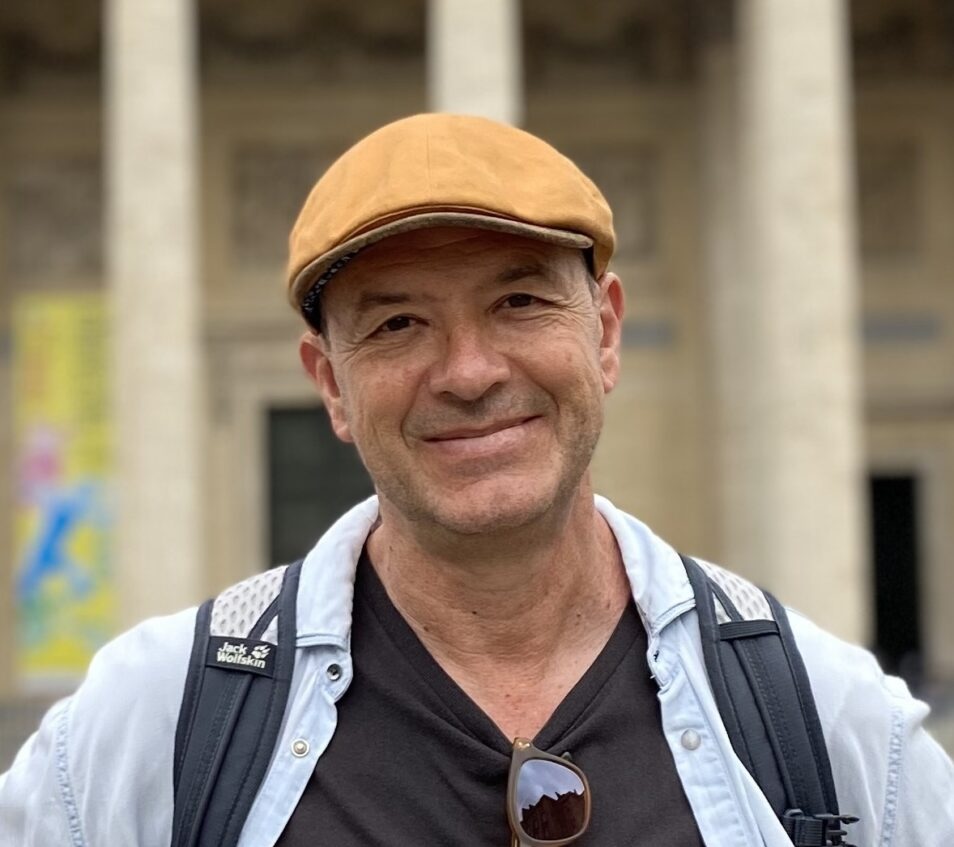
Tommie Meyer
Title: Defeasible Reasoning
Preferential approaches to defeasible reasoning have turned out to be particularly promising for the propositional case, mainly because they are based on an elegant, comprehensive, and well-studied framework for non-monotonic reasoning proposed by Kraus, Lehmann, and Magidor—often referred to as the KLM approach. In the first part of this talk I will provide an introduction to propositional KLM-style defeasible reasoning. This will be followed by an overview of attempts to extend KLM-style defeasible reasoning beyond propositional logic. More specifically, I’ll look at the application of the KLM approach to description logics and some restricted first-order logics. In doing so, I’ll describe what has worked well, but also what are the (many) remaining challenges.
Important Dates
| Paper registration | |
| Paper submission | |
| Notification | May 18, 2026 |
| Camera-ready | June 17, 2026 |
| Workshop | July 17–19, 2026 |
Registration
You can register for NMR 2026 under the following link: FLoC 2026 Registration (Workshops, DL & NMR).
Early bird rates apply until June 1.
Submission Details
We invite two types of submissions:
- Full papers. Full papers should be at most 14 pages including references, figures and appendices. Papers already published or accepted for publication at other conferences are also welcome, provided that the original publication is mentioned in a footnote on the first page and the submission at NMR falls within the authors' rights. In the same vein, papers under review for other conferences can be submitted with a similar indication on their front page.
- Extended Abstracts. Extended abstracts should be at most 3 pages (excluding references and acknowledgements). They should introduce work that has recently been published or is under review, or ongoing research at an advanced stage. We highly encourage to attach to the submission a preprint/postprint or a technical report. Such extra material will be read at the discretion of the reviewers. Submitting already published material may require a permission by the copyright holder.
All submissions should be formatted in CEUR style (1-column). Author kit: CEURART.zip. Papers must be submitted in PDF only.
Please submit your contribution through the NMR 2026 Submission Portal.
Organization
General Co-Chairs
| Ana Ozaki | University of Oslo and University of Bergen, Norway |
| Nico Potyka | Cardiff University, UK |
Local Chair
| Ricardo Gonçalves | Universidade Nova de Lisboa, Portugal |
Publicity Chair
| Jacek Wegrzynowski | University of Oslo, Norway |
Programme Committee
| Ofer Arieli | The Academic College of Tel-Aviv |
| Ringo Baumann | Leipzig University |
| Lydia Blümel | Universität Leipzig |
| Alexander Bochman | Computer Science Dept., Holon Institute of Technology |
| Richard Booth | Cardiff University |
| Giovanni Buraglio | TU Wien |
| Giovanni Casini | ISTI - CNR |
| Jens Classen | Roskilde University |
| Eduardo Fermé | Universidade da Madeira, Portugal |
| Laura Giordano | DISIT, Università del Piemonte Orientale |
| Jonas Philipp Haldimann | TU Wien |
| Andreas Herzig | CNRS, IRIT, Univ. Toulouse |
| Haythem Ismail | Cairo University and German University in Cairo |
| Antonis Kakas | University of Cyprus |
| Gabriele Kern-Isberner | Technische Universität Dortmund |
| Sébastien Konieczny | CRIL - CNRS |
| Isabelle Kuhlmann | FernUniversität in Hagen |
| Tuomo Lehtonen | Aalto University |
| Fenrong Liu | Tsinghua University |
| Yasir Mahmood | University of Paderborn |
| Thomas Meyer | University of Cape Town and CAIR |
| Xavier Parent | TU Wien |
| Ramon Pino Perez | Université d'Artois |
| Sylwia Polberg-Riener | Cardiff University |
| Antonio Rago | Imperial College London |
| Anna Rapberger | Imperial College London |
| Jandson Ribeiro | Cardiff University |
| Sebastian Rudolph | TU Dresden |
| Zeynep G. Saribatur | TU Wien |
| Ken Satoh | Center for Juris-Informatics, ROIS, Japan |
| Kai Sauerwald | University of Hagen |
| Gerardo Simari | Universidad Nacional del Sur (UNS) and CONICET |
| Van-Giang Trinh | Inria Saclay |
| Serena Villata | CNRS - Laboratoire d'Informatique, Signaux et Systèmes de Sophia-Antipolis |
| Renata Wassermann | University of Sao Paulo |
| Emil Weydert | CSC, University of Luxembourg |
| Stefan Woltran | TU Wien |
| Fan Yang | Utrecht University |
Workshop Proceedings
The accepted papers will be made available electronically in the CEUR Workshop Proceedings series as informal proceedings (http://ceur-ws.org/). The copyright of papers remain with the authors. Full papers will be indexed by dblp.org; but extended abstracts published on CEUR proceedings will not be indexed by dblp.org anymore.
Sponsored by